
If you’ve ever scrolled through TikTok, Instagram, or Discord and seen terms like “emo,” “shook,” “GOAT,” or “clout” and wondered what they mean, you’re not alone. These are part of Gen Z slang — the unique, fast-evolving language of the Z generation (born roughly between 1997 and 2012). Understanding these phrases isn’t just fun; it’s key to decoding a generation’s culture, humor, and social signals. 🌍
What is Gen Z Slang?
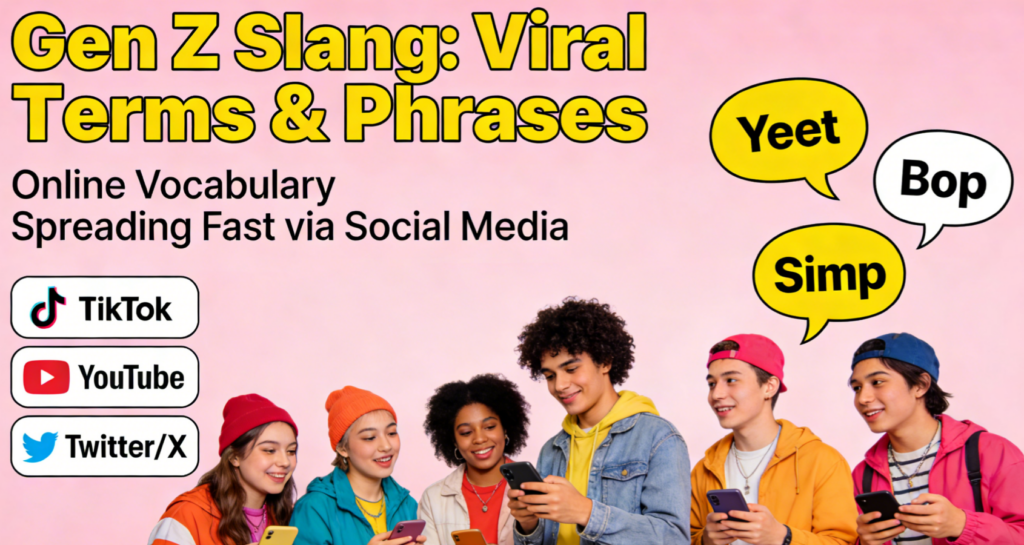
Gen Z slang refers to words, phrases, and expressions widely used by Generation Z online. Unlike traditional slang, it spreads extremely fast, often going viral in just days thanks to platforms like TikTok, YouTube, and Twitter/X.
Key characteristics:
- Rapid Spread– A term can emerge in a small niche and become mainstream globally in days.
- High Emotional Intensity– Words like “emo,” “broken,” or “shook” convey strong emotions concisely.
- Community Identity– Using or understanding the right slang signals insider status among peers.
Put simply, slang Gen Z is a cultural code as much as a language tool.
Origins of Gen Z Slang
Gen Z slang comes from a variety of sources:
- Social Media Platforms– TikTok, Instagram, and YouTube comments drive rapid meme creation.
- Gaming Culture– Terms like “carry,” “nerf,” or “OP” originated in online multiplayer games.
- Meme & Internet Culture– Internet jokes, viral videos, and emoji usage heavily influence language.
- Global Cultural Influence– English terms, anime, K-pop, and rap culture often inspire new slang.
The Internet allows these words to travel quickly, connecting young people across continents. 🌐
Common Gen Z Slang Words & Phrases
Here’s a breakdown of some of the most common list of Gen Z Slang:
1️⃣ Emotion & Mood
| Slang | Meaning | Example |
| emo | Feeling emotional or down | “Feeling emo today after that movie 😢 |
| broken | Mentally or emotionally overwhelmed | “I’m so broken after finals 😭” |
| shook | Shocked or surprised | “I was shook when I saw that plot twist 😱” |
| vibes | Overall feeling or atmosphere | “This song gives me chill vibes 🎶” |
2️⃣ Social Behavior & Culture
| Slang | Meaning | Example |
| ghosting | Suddenly ignoring someone | “He ghosted me after two dates 👻” |
| flexing | Showing off | “She’s flexing her new sneakers 🔥” |
| cancel culture | Collective social disapproval | “The actor got canceled for controversial remarks 🚫” |
| clout | Social influence or popularity | “He’s just posting for clout 😏” |
3️⃣ Praise & Exaggeration
| Slang | Meaning | Example |
| GOAT | Greatest of All Time | “Serena Williams is the GOAT 🏆” |
| YAAAS | Enthusiastic agreement | “YAAAS queen! 👑” |
| vibes | Positive feelings or energy | “This party is giving major good vibes ✨” |
| big mood | Strong identification with a feeling | “Waking up on Monday morning… big mood 😩” |
Why is Gen Z Slang So Popular?
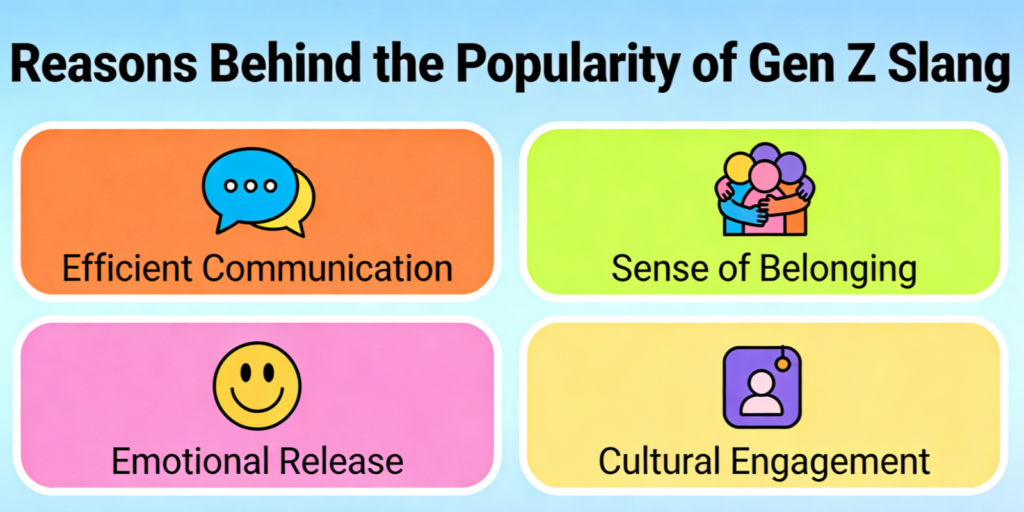
- Efficient Communication– Slang often conveys complex emotions in one word.
- Sense of Belonging– Using slang signals you’re “in the know” with peers.
- Emotional Release– Words like “break,” “emo,” or “shook” act as outlets for stress.
- Cultural Participation– Joining meme trends through slang keeps users engaged online.
In short, Gen Z Slang terms are both a communication tool and a cultural badge.
Recommended Video Chat Platforms
For users looking to experience the combination of Gen Z slang and instant video social networking, these platforms are worth trying:
| Platform | Features | Mobile Support |
| Meetgle | No registration required, fast matching | ✅ iOS/Android browser |
| Fox Video Chat | Lightweight interface, strong privacy controls | ✅ Mobile & PC |
| Hotmegle | High bandwidth, fast matching | ✅ Multi-device support |
| Chatous | Selectable interest tags, one-on-one chat | ✅ Browser + App |
These platforms all support 1v1 video chat, making them ideal for Gen Z users to build natural and humorous conversations using Gen Z slang.
How Brands & Marketers Can Use Gen Z Slang
⚠️ Warning: Misusing slang can backfire.
✅ Do:
- Understand context before using terms
- Use slang sparingly in social posts
- Match your brand tone with the slang’s emotion
❌ Don’t:
- Force slang in campaigns
- Overstuff content with multiple slang words
- Ignore the generational context
When used correctly, Gen Z slang can help brands appear relatable and in touch.
The Lifecycle of Gen Z Slang
- Niche Usage– Small communities or fandoms create the slang.
- Viral Spread– Go mainstream through TikTok, YouTube, or memes.
- Oversaturation– Overuse causes fatigue, and eventually the slang becomes “uncool.”
Brands need to act fast but wisely to leverage trending phrases.
Future Trends
- Language + Emoji Combination 🫶
Slang will increasingly incorporate emojis and emoticons, making video chats more engaging.
- Cross-Platform Spread 🌐
These slang terms not only appear in 1v1 video chats but also flow into platforms like TikTok, Instagram, and Discord, forming a global Gen Z culture.
- Shorter Sentence Trend ⏱
Short, exaggerated, and attitude-driven expressions are becoming increasingly popular, such as “gets all worked up at the drop of a hat 🔥”.
- Brand Marketing Value 💼
Understanding and correctly using Gen Z slang can help brands more easily resonate with young users on video social media and short video platforms.
Tips for Quickly Understanding Gen Z Slang
- Read Comments– TikTok, Instagram, Reddit threads are rich in context.
- Follow Young Creators– Observe how influencers naturally use slang.
- Ask & Learn– If you don’t get a term, check Urban Dictionary or simply ask online.
Language is meant to connect people. Understanding slang keeps you in the loop.
Conclusion
Gen Z slang is far more than quirky internet words—it reflects a generation’s emotions, culture, and social identity. 🌟
Whether you’re a parent, educator, brand marketer, or just curious about digital youth culture, decoding these phrases gives insight into Z-generation life.
From “emo” to “GOAT,” these words are the emotional shorthand of a hyper-connected generation. Understanding them is key to connecting with today’s youth online.
FAQs
- How is Gen Z slang different from Millennial slang?
Gen Z slang evolves faster and is more internet-driven. While Millennials relied on early social platforms and texting culture, Gen Z slang often originates from meme culture, gaming, and viral content trends. - Where does most Gen Z slang come from?
Many Gen Z slang terms originate from online communities, AAVE (African American Vernacular English), gaming culture, and platforms like Twitter and YouTube. - Why does Gen Z create so many new words?
Gen Z values creativity, humor, and identity expression. Slang helps them build community, signal belonging, and stay culturally relevant in fast-moving digital spaces. - Can older generations understand Gen Z slang?
Yes, but it may require context. Since slang changes rapidly, keeping up with trending terms through social media and pop culture helps bridge the generational gap. - Is Gen Z slang constantly changing?
Trends can rise and fall within weeks. What’s popular today on platforms like Snapchat might be outdated next month.