

Introduction
In today’s rapidly evolving social network landscape, new applications are constantly emerging, but some platforms, thanks to years of accumulation, still maintain a stable user base. Tagged is one of them. As a social and dating platform that has been online for many years, Tagged has attracted a large number of young users worldwide. So, in today’s fiercely competitive social market, what advantages does Tagged still have? Is it still worth trying? This article will provide a comprehensive analysis of Tagged.
What is Tagged?
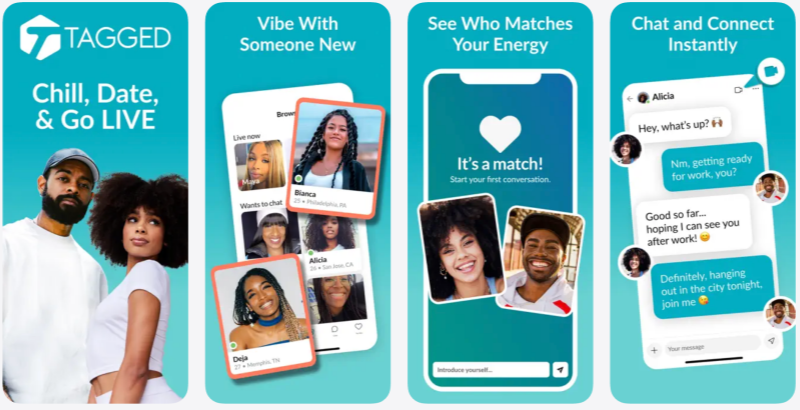
Tagged is a social platform centered on meeting new friends. It started as a web-based platform and later developed into a mobile application supporting Android and iOS. The platform focuses on “meeting strangers” and “expanding your social circle,” allowing users to connect by creating profiles, browsing recommended users, and sending messages.
Unlike traditional social networks, Tagged dating app does not emphasize real-world social relationships but rather leans towards stranger-based social interaction and light online dating, which has resulted in a diverse user base globally.
Tagged Login / Sign In Quick Start Guide
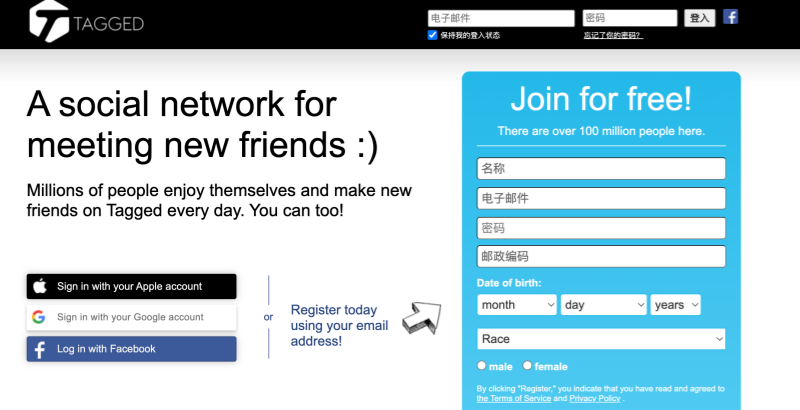
- Open the Tagged website or mobile app (Android / iOS)
- Click the tagged login or tagged sign in button
- Enter the email address or username and password used during registration
- After successful login, you will be taken to your profile page to start chatting and socializing
Frequently Asked Questions
- New users will be automatically redirected to the tagged login page after registration.
- Forgot your password? You can reset it using the “Forgot Password” function.
- When logging in on public devices, do not check “Remember login status” to ensure account security.
What Can You Do on Tagged
1. Discover New Friends
Tagged recommends other users who might be of interest based on a user’s basic information, activity level, and location. Users can browse profiles and initiate interactions.
2. Instant Messaging System
The platform has a built-in real-time chat function, supporting text messages and basic emoticons. Chatting is one of Tagged’s core use cases.
3. Gamified Social Mechanism
A key feature of Tagged is its integration of mini-games into the social experience. For example, users can meet new friends through interactive games, lowering the psychological barrier to chatting with strangers.
4. Virtual Currency and Advanced Features
Tagged uses a points or virtual currency system to unlock more interactive privileges, such as viewing more visitors and increasing exposure. Paid membership services are also available.
Tagged’s Advantages
1. Large User Base
As an established platform, Tagged has accumulated a large user base in multiple countries and regions, with a relatively stable online user base, making it easier to get responses.
2. Relaxed Social Atmosphere
Compared to serious dating platforms, Tagged’s overall atmosphere is more entertaining and casual, suitable for light chatting and passing the time.
3. Diverse Interaction Methods
Through various forms of interaction, such as chatting, browsing, and mini-games, users can choose the interaction method that best suits them, reducing social pressure.
4. Easy to Use
The registration process and interface are relatively intuitive, and new users can start using it without complicated learning.
Shortcomings and Potential Problems of Tagged
1. Obvious Paid Access
Although Tagged can be used for free, many practical features require payment to unlock. As usage time increases, users are likely to encounter situations where features are limited.
2. Fake Account Issues
Some users have reported the existence of inactive or suspected fake accounts on the platform, which to some extent affects the genuine social experience.
3. Limited Matching Accuracy
Tagged’s recommendation mechanism is more based on basic information and considers less in-depth matching such as interests and values, easily resulting in duplicate or low-relevance recommendations.
4. Outdated Interface Design
Compared to some emerging social applications, Tagged’s interface style and interactive experience appear somewhat traditional, limiting its appeal to users who value design.
Comparison of Tagged App with Similar Platforms
Compared to other stranger social or dating applications, Tagged’s advantages lie in its user base and relaxed atmosphere, but it is slightly lacking in algorithm accuracy and functional innovation. It’s more of a “social entertainment platform” than a serious matchmaking tool.
Platform Function Comparison Table
|
Platform Name | Core Positioning | User Scale | Matching Mechanism | Paid User Base |
Suitable Audience |
|
Tagged | Stranger Social Networking / Casual Dating | Larger (Global) | Basic Recommendation | Medium |
Users who want easy chatting and casual social interaction |
| Quick Dating | Very Large | Slide Matching | Medium-High |
Users who value appearance and quick matching | |
| Social + Dating | Large | Interest + Location | Medium |
Users who want a combination of online and offline experiences | |
| International Social Networking | Medium | Activity Recommendation | Slightly High |
Users who enjoy cross-border chatting | |
|
Plenty of Fish | Serious Dating | Medium | Questionnaire Matching | Lower |
Users seeking long-term relationships |
Platform Positioning
From an overall positioning perspective, Tagged leans more towards a social entertainment platform. It doesn’t focus on “quick dating” like Tinder, nor does it emphasize long-term relationships like Plenty of Fish; instead, it falls somewhere in between, emphasizing meeting new friends and easy interaction.
User Scale and Activity Performance
In terms of user base, Tagged, as an established platform, maintains a relatively stable global user base with high activity levels, although its popularity among younger users is slightly lower than some emerging applications.
Matching Mechanism and Recommendation Accuracy
Regarding its matching mechanism, Tagged’s algorithm is relatively basic, primarily relying on user profiles, online status, and activity levels for recommendations, with limited consideration for depth of interest and personality matching. This is slightly less effective compared to Badoo or some serious dating platforms, but it also lowers the barrier to entry.
Payment Model and Usage Cost Analysis
In terms of its monetization model, Tagged is at a moderate level. While chatting and browsing are free, increasing exposure and viewing more interactive information usually requires payment. Compared to Waplog’s high-cost chat mechanism, Tagged’s payment pressure is relatively mild.
Who is Tagged Suitable For?
In summary, Tagged is more suitable for the following types of users:
- Users who want to easily meet strangers
- People who enjoy entertaining and gamified social experiences
- Users who are not in a hurry to find serious relationships and just want to chat and make friends
- People interested in international social interaction or multicultural exchange
If you value high matching rates, strict identity verification, or long-term stable relationships, Tagged may not be the best choice.
Practical Tips for Using Tagged
- Use the free features initially to familiarize yourself with the platform’s mechanisms.
- Be cautious with recharging; avoid investing too much at once.
- Be wary of overly proactive or templated messages.
- Complete but not excessively expose your personal information; pay attention to privacy and security.
Is Tagged Worth Using?
Overall, Tagged is a social platform with both obvious advantages and disadvantages. It performs well in terms of user numbers, entertainment value, and ease of use, but there’s still room for improvement in terms of payment restrictions, account quality, and design.
If you use Tagged as a way to easily meet new friends, rather than having overly high expectations for the outcome, it still has some value. The key is to use it reasonably and rationally to achieve a better social experience.
FAQs
1. Are the users on Tagged real?
There are many real users on the platform, but some users have reported occasionally encountering inactive or suspected fake accounts. It is recommended to maintain rational judgment during interactions and not easily invest money or private information.
2. How accurate are Tagged’s matching recommendations?
Tagged’s recommendation mechanism is mainly based on basic information and activity level. The matching accuracy is generally average, making it more suitable for casual chatting than highly precise matching of interests or values.
3. Is Tagged’s paid model expensive?
Overall, Tagged’s paid model is at a moderate level. Compared to some platforms that charge per chat, Tagged’s usage cost is relatively controllable, but long-term use may still incur some expenses.
4. Which devices and platforms does Tagged support?
Tagged supports web access and also provides Android and iOS mobile apps, allowing users to interact socially anytime, anywhere.