

fachat
Luna Harper
Table of Contents
ToggleIntroduction
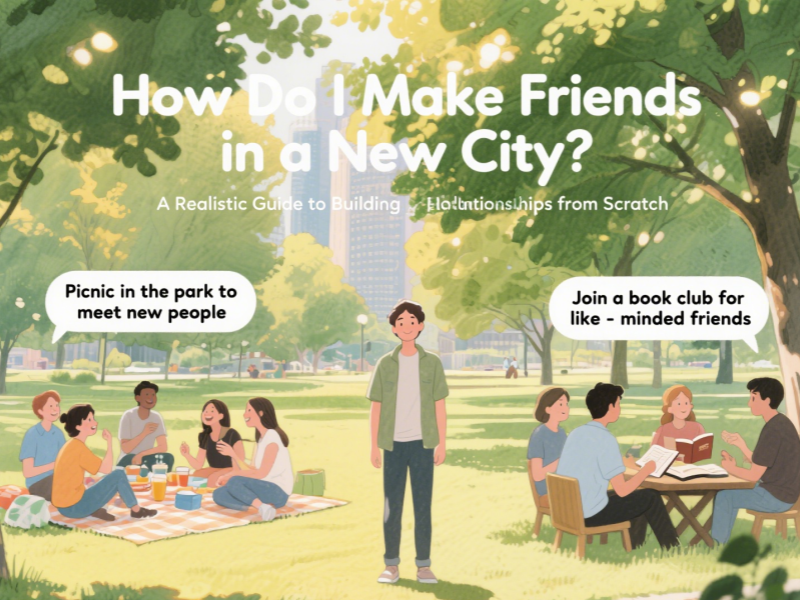
The standard advice is everywhere. Join a gym. Try Meetup. Be yourself. It all sounds fine. But none of it tells you what to actually do on a Wednesday evening when you’re sitting in your apartment and the walls are getting a little too familiar.
So I tried stuff. Some of it was embarrassing. Some of it worked. The seven things below are the ones that actually panned out. Not theory. Not “mindset shifts.” Actual playbook material.
Why Making Friends as an Adult Is Genuinely Hard 🧠
Let’s name the elephant.In college, friends were built into the infrastructure. Shared bathrooms. Shared misery over dining hall food. Shared boredom in lecture halls. You didn’t have to try because proximity did ninety percent of the work.
Adulthood deletes all of that. Everyone’s calendar is packed. Everyone’s tired. And the few people you do encounter — coworkers, mostly — already have their lives full. They’re not sitting around refreshing their social circle.
The other thing nobody mentions: starting from zero in a new place feels awkward in a way that’s hard to articulate. You don’t know which bar is the social bar and which bar is the drinking-alone bar. You don’t know if chatting up someone at the gym is friendly or strange. There’s no shared history. No mutual friend to do the introduction. Every tiny interaction carries extra weight because there’s no context.
It’s not that you forgot how to make friends. It’s that the entire system you used to rely on got deleted overnight. The game didn’t get harder. The rules changed and nobody handed you the manual.
That’s what this is. A manual. Seven things. Tested. Not guaranteed — nothing is — but better than “join a gym” and hoping for the best.
Say Yes to Everything for the First Month 🙋
The first 30 days run on a single rule: if someone invites you to something, the answer is yes. Coworker’s happy hour that sounds tedious? Yes. Neighbor’s house party, where you’ll know exactly one person — the neighbor? Yes. Someone from yoga mentions a weekend market? Ask if you can tag along.Here’s why. You don’t have enough data yet. You can’t predict which random Tuesday event is going to connect you to the right person. So you remove the prediction step entirely. You just say yes. To everything. For 30 days. Some of it will suck. That’s fine. I went to an improv show in my first month that was genuinely painful to sit through. But at that terrible improv show, I met someone who invited me to a running club. At the running club, I met three people I actually liked. Two of them are still in my life.
That’s the math. You kiss a few frogs. You open every door. You can close the bad ones later. Month one is not about quality. It’s about volume.
Join a Weekly Class — Not a One-Time Event 📅
What actually worked: a Tuesday night pottery class. Six weeks. Same eleven people. Week one, nobody said a word. Week three, we were sharing tools and roasting the instructor’s playlist. By week six, I had two real friends. Here’s the science. After seeing someone three or four times, your brain stops labeling them as a stranger. Familiarity does something chemical. It lowers the barrier. Conversations that would feel forced on day one feel natural by week three.
Use Apps Intentionally — Not Just for Dating 📱
I know. Using an app to make friends feels like admitting something. Like you’re holding up a sign that says “I couldn’t do this the normal way.” Here’s the reality: everyone I know who moved cities in the last three years used Bumble BFF or Meetup or a local subreddit at some point. It’s not weird. It’s practical. The stigma died years ago. But most people use these apps incorrectly. They scroll. They swipe. They never message anyone. Then they wonder why nothing happens.Treat a friendship app like a dating app. Swipe with intention. Send the first message within a day — and make it specific. Not “hey.” Reference something in their profile. Propose a plan within the first five exchanges. Don’t let it turn into a pen-pal death spiral.
Your profile matters more than you think. Skip “I love traveling and having fun.” That’s every profile. Write something someone can actually respond to. “Currently training for a half-marathon and need a running partner.🏃” Trying every taco spot in the city and ranking them🌮 .” Specificity is a gift. It gives the other person an opening line for free. Some people I know use video chat platforms to pre-screen before meeting in person. A five-minute video call tells you more about chemistry than two weeks of texting. If the vibe fits, you grab coffee. If not, you saved yourself an awkward hour and fifteen bucks.
Become a Regular Somewhere ☕
There’s a coffee shop two blocks from my apartment. I started going every Tuesday and Thursday morning. Same chair. Same order.First month? Nothing. I was just a man with a laptop. Then one day the barista said “the usual?” and I felt stupidly proud of this. By month two, I recognized the other regulars. The woman with the greyhound. The guy who always takes calls in the corner. We nodded. By month three, one of them asked what I was working on. That conversation lasted ten minutes. We’re not best friends. But we’re something. And that something exists because I sat in the same chair at the same time twice a week for three months.
The key: pick somewhere you’d go anyway. Not a CrossFit box you’ll hate after two sessions. A place you genuinely like. Then just… keep showing up.
Host — Don’t Wait to Be Invited 🏠
Here’s something that took me way too long to learn. Most people are waiting for someone else to make the first move.It’s not rejection. It’s passivity. Organizing social stuff takes energy, and most people default to doing nothing. If you’re waiting to be invited, you’ll be waiting until you move to the next city.
Start small. After class one week: “Hey, I’m grabbing coffee after this if anyone wants to join.” Half the time nobody comes. That’s fine. The other half, two people tag along and suddenly you have a thing.
The best invitation script I know: “I’m trying to explore more of the city — thinking of checking out that new taco place Saturday. Want to come?” It’s honest about where you are. It’s casual. It’s specific. “Let’s hang out sometime” is a non-invitation. “Tacos, Saturday, 1pm” is a plan. Hosting doesn’t mean dinner parties. It means being the one who says the thing. The one who sends the group text. The one who picks the time and place. Do that even twice a month and you’ll have a social life faster than you think.
Turn Colleagues Into Friends 💼
Work is this strange social purgatory. You spend forty hours a week with people but almost never interact outside of meetings and Slack threads. Shared spreadsheets don’t create emotional bonds.But the raw ingredients are there. Repeated contact. Shared context. That’s already more than you have with a stranger at a bar.
The path from colleague to friend follows a reliable arc.
- Step one: eat lunch with people. Not at your desk 🍽️.
- Step two: after a few lunches with the same person, suggest something low-stakes outside work. A drink 🍻. A weekend market. Nothing intense.
- Step three: if the chemistry is right, introduce them to someone else you know. That act — connecting two people from different corners of your life — signals real friendship.
Remote workers, you’re on hard mode but the principles hold. Virtual coffee. Co-working at a cafe if you share a city. A Slack channel for non-work chatter. You just have to manufacture the casual collisions that an office provides for free.
Follow Up — The Skill Nobody Uses ✉️
I can’t tell you how many perfectly good potential friendships I watched die because neither of us sent the follow-up text. You meet someone. The conversation clicks. You both say, “We should definitely do this again.” And then nothing. A week passes. Then two. Then it’s been a month and texting would be weird now, so you don’t. That person, who could have been a real friend, becomes a name in your phone you scroll past and feel vaguely guilty about.
The fix is painfully simple. Send the message within forty-eight hours. Not a week. Not when you feel like it. Two days.
Template: “Great meeting you at [place]. I keep thinking about what you said about [specific thing from the conversation]. [Quick thought.] Coffee sometime?”
The secret nobody tells you: the difference between people who build a social circle and people who stay lonely isn’t charisma. It isn’t luck. It’s the willingness to be the one who sends the text. Most people won’t. If you do, you’re already ahead of nearly everyone in your city.
The Honest Takeaway 💬
This won’t be smooth. Your first month will be awkward. Some events will suck. Some texts will go unanswered. You’ll wonder if you’re doing it wrong. You’re not. That’s just what it looks like.Pick one thing from this list. Not three. Not all seven. One thing. Do it this week. Not next month when you feel ready — you won’t ever feel ready. Do it anyway. The rest will stack from there. The people I’m closest to now came from a pottery class, a running club, and a text I almost talked myself out of sending. None of it was graceful. But that’s not the point. The point is showing up and staying in the game longer than your own resistance wants you to.
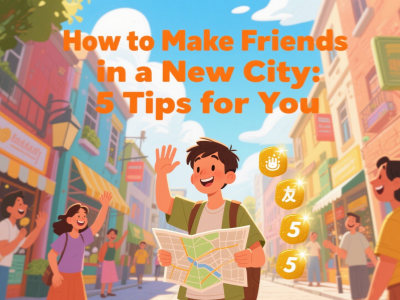
How to Make Friends in a New City: 5 Tips for You
FAQs
1. How long does it usually take to make real friends in a new city?
It varies for everyone, but on average, it takes 3–6 months of consistent effort to form meaningful connections. The key is to be proactive, attend local events regularly, and follow up with people you meet. Building real friendships takes time, but small steps—like joining a class or sending a simple follow-up message—can make a big difference.
2. What if I’m introverted or shy? Can I still make friends?
Absolutely. Being introverted doesn’t mean you can’t build strong friendships—it just means you may prefer deeper, one-on-one interactions over group activities. Focus on environments that feel comfortable, like book clubs, coworking spaces, or hobby-based meetups. Apps like Fachat can also offer safe 1v1 conversations that help you ease into new connections.
3. Is it okay to use apps or social media to meet people in a new city?
Yes, in fact, it’s one of the most effective modern ways to make friends. Platforms like Facchat or local Facebook groups, Reddit communities, Bumble BFF, and Meetup are great tools for meeting like-minded individuals. Just be genuine, take safety precautions, and treat online interactions as a gateway to building real offline friendships.